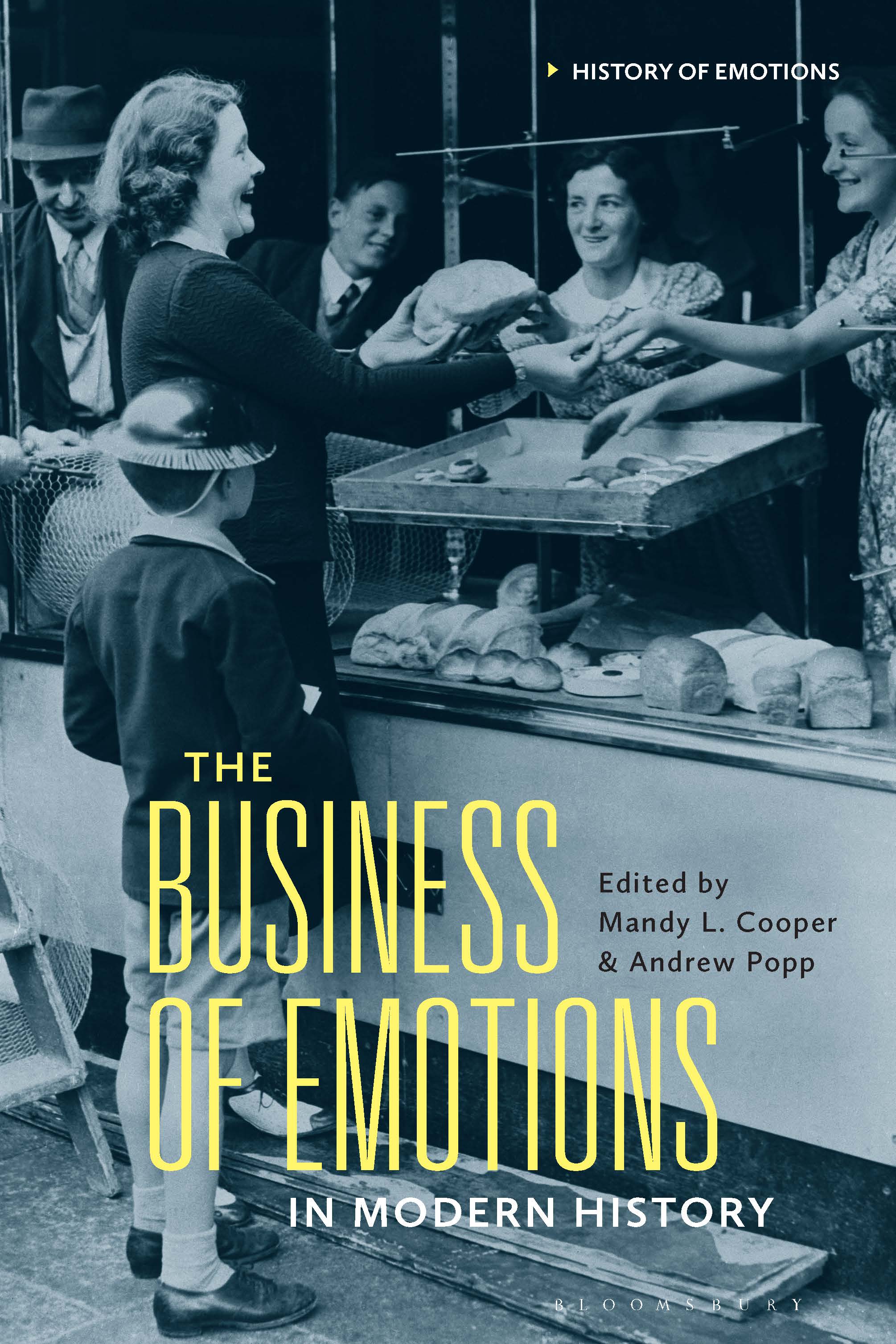
The Business of Emotions in Modern History shows how businesses, from individual entrepreneurs to family firms and massive corporations, have for centuries relied on, leveraged, generated and been shaped by emotions. With a broad temporal and global coverage, ranging from the early modern era to the present day and across Africa, Asia, Europe and North America, the essays in this volume highlight the rich potential for studying the histories of emotions and business in tandem.
In exploring how emotions and emotional situations affect business, and in turn how businesses affect the emotional lives of individuals and communities, this book allows us to recognize the emotional structures behind business decisions and relationships, and how to question them. From emotional labor in family firms, to affective corporate paternalism and the role of specific emotions such as trust, fear, anxiety love and nostalgia in creating economic connections, this book opens a rich new avenue of research for both the history of emotions and business history.
The Business of Emotions in Modern History is the first work to explicitly bring together the histories of business and emotion in sustained dialogue. The volume as a whole integrates the histories of business and emotions, showing that emotions are—and have been—at the heart of the market, of the enterprise, and of capitalism. The introduction, “At the Heart of the Market,” co-authored with Andrew Popp, integrates the histories of business and emotions, reframing rationality as affect, as well as thought.
My chapter for the book, “Emotional Strategies: Businesswomen in the Civil War Era United States,” pulls from my second planned monograph to investigate the emotional strategies used by southern businesswomen to sell their wares and services in the nineteenth-century United States. As women in the Civil War era South navigated the business world, they watched, listened, and learned from each other, developing strategies that deployed emotion in different ways, all to great effect. Paying attention to emotion as a strategy for attracting customers, selling goods, and participating in the business world reveals several things about the way business worked in the Civil War era United States. More importantly, however, this chapter shows that if we take emotion and plays on emotion seriously as a clear business strategy, we can more clearly see how women navigated through and around the laws that were designed to keep them from fully participating in the economic realm.
The Business of Emotions is available from Bloomsbury Academic as part of their History of Emotions series.
 Mandy L. Cooper, PhD